

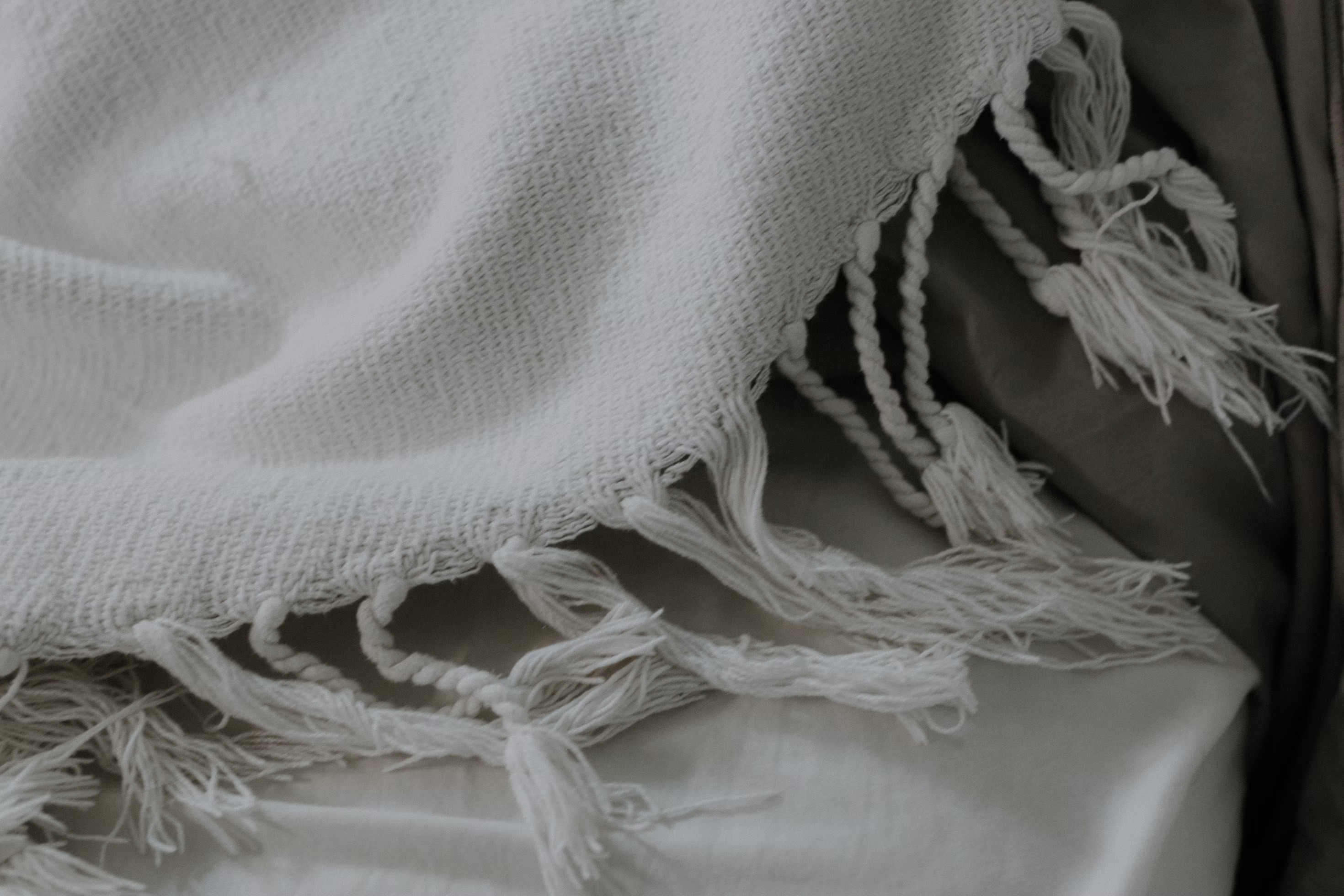
Clothes moths are the reason most good wool never makes it to us. They like it dark, undisturbed and slightly dirty, which describes the back of most wardrobes. By the time you notice a hole, the larvae have usually moved on.
Not all damage is equal. A single pinhole away from a seam is a ten-minute darn that, done in matching yarn, you'll struggle to find again. A scattering of small holes across one panel is fixable but visible, and we grade it accordingly. A grazed patch, where the surface fibres have been eaten but not the yarn underneath, is a judgement call: it may hold for years or open up in a season.
What we won't sell is damage in a load-bearing place — an underarm, a cuff edge, a seam — or a piece where we find live larvae. Everything else is photographed close up and described, so you decide.
“A neat darn is a repair. A hole in a seam is a decision about to be made for you.”
Everything we take in is frozen for 72 hours before it's brushed, checked and stored. At home, wash wool before you put it away for summer, keep it in cotton bags, and take it out and shake it once a month. Moths hate being disturbed more than they hate cedar.
