

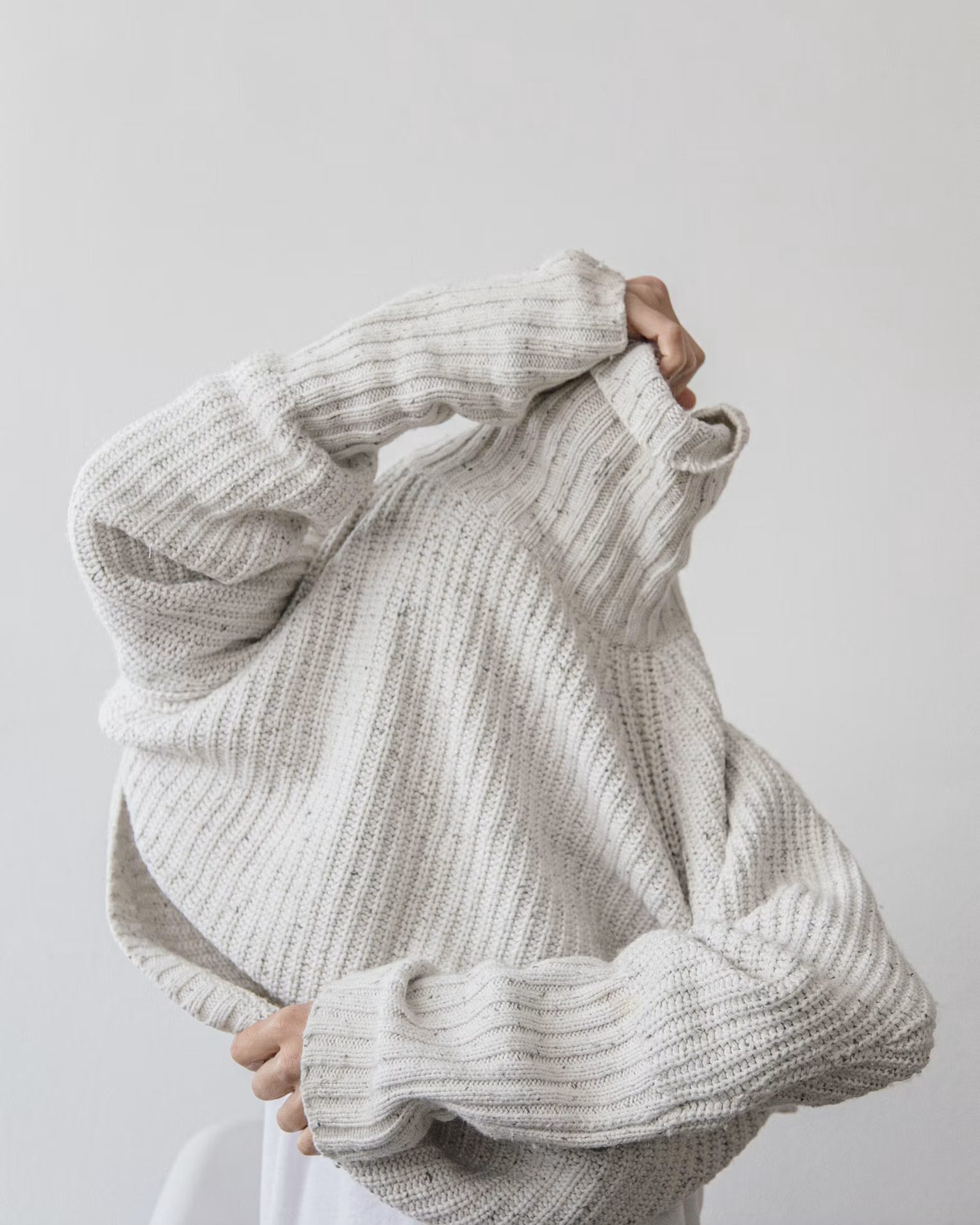
Most wool that comes to us has survived decades of wearing and been ruined by a single wash. Felted cuffs, a jumper two sizes smaller than the label, a scarf gone stiff as card. The fibre is tougher than it looks; it just hates heat, friction and sudden changes of temperature.
So wash it less than you think. Wool is naturally resistant to smells and most marks brush off once dry. An evening on a hanger by an open window does more than people expect. When it does need a wash, use cool water — no warmer than your hand — and a small amount of wool detergent. Let it soak for ten minutes. Don't rub, don't scrub.
Rinse in water of the same temperature, then press the water out against the side of the basin. Never wring. Roll it in a dry towel, press again, and lay it flat on another towel to dry, easing it back into shape while it's damp.
“Heat and friction undo forty years of good knitting in a single afternoon.”
Keep it folded rather than hung, and out of direct sun. If your machine has a wool cycle you trust, use it on cold with a low spin. If you're not sure, the basin has never shrunk anything.
